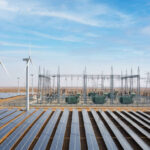
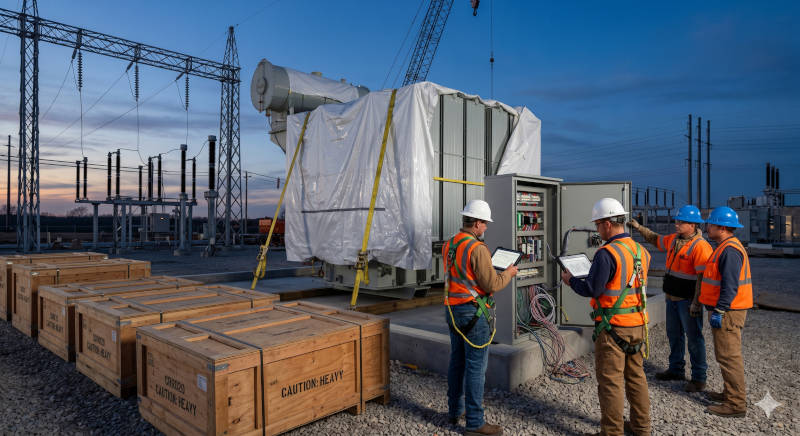
The booming demand for grid-scale renewable energy has exposed a major vulnerability in project execution: a global manufacturing bottleneck for critical power infrastructure. Large power transformers and specialized medium-voltage control panels are currently facing lead times stretching past 24 months. For wind and solar developers looking to connect to the grid, waiting until a project is built to order or test equipment is no longer an option.
To prevent Interconnection Agreement deadlines from slipping, engineering teams are shifting their focus to a commissioning-first design approach.
The Pre-Commissioning Blueprint
Instead of treating testing and commissioning as the final step before switching the power on, successful projects are integrating testing engineering into the initial procurement phase.
- Advanced Review of Test Results: Factories supplying large transformers are operating at maximum capacity. Third-party review of factory acceptance testing (FAT) results ensures that manufacturing anomalies are caught before the unit is shipped across the country or ocean.
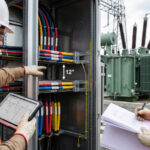
- Component Standardization: Using non-proprietary control panel designs allows field engineers to quickly adapt or replace internal relays and components if the primary supply chain fails.
- Fiber Optic Safeguards: Designing robust fiber optic SCADA networks early allows for seamless communication between the generation source and the substation, minimizing field troubleshooting when the system is finally energized.
The Takeaway: In 2026, project velocity isn’t determined by how fast you can install a solar array or wind turbine—it’s determined by the efficiency and precision of your substation integration plan.